Feeding: cutter-compactor, force feeder or hopper
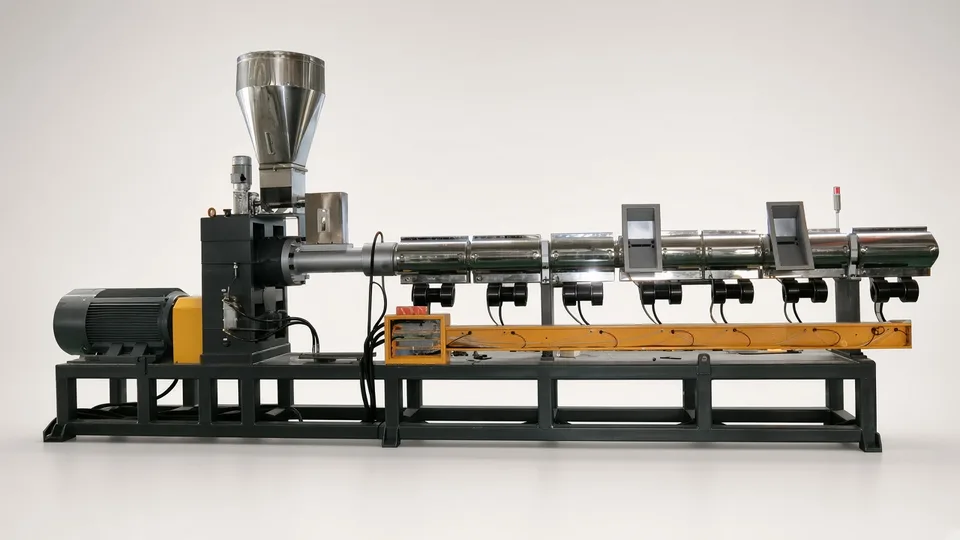
Film is light and bridges in a hopper, so it needs a cutter-compactor or force feeder. Rigid flakes can drop straight in. Ask which feed the quoted output was measured with.
 No Drama
Buyer guide · Plastics & molding
A pelletizing line's kilograms per hour are measured on clean, dry, easy scrap, and printed, wet or mixed feed can halve what comes out while the screen changer clogs.
01
Film is light and bridges in a hopper, so it needs a cutter-compactor or force feeder. Rigid flakes can drop straight in. Ask which feed the quoted output was measured with.
A two-stage line passes the melt through a second extruder with its own filter. Heavily printed or dirty film often needs it; clean factory scrap usually does not.
Ink, moisture and volatiles leave through vents on the barrel. Ask how many vents, and whether vacuum is applied. Too few and the pellets come out full of bubbles.
A manual screen changer stops the line to change screens. A continuous or backflush changer does not. On dirty feed this decides how many hours a day the line produces.
Strand cutting pulls strands through a water bath to a cutter. Water-ring and underwater cutters cut at the die face. Strand cutting is simple but breaks on some melts; die-face cutting costs more.
02
Send these with the enquiry. Without them, any number a factory gives you is a guess dressed as a quotation.
03
| Require this | A pass looks like |
|---|---|
| Run a sample of your own scrap, sent in advance, for at least one timed hour at steady state. | Pellet output weighed over that hour meets the figure in the offer for your feed. |
| Cut pellets open and inspect them. | No visible bubbles or voids beyond the level agreed before the test. |
| Record melt pressure ahead of the screen changer through the run. | Screen changes needed no more often than the interval stated in the offer. |
04
05
A plastic granulator. Regrind goes straight back into the hopper; melting and pelletizing is an extra step you may not need.
An industrial plastic shredder ahead of the line, sized for the lumps, before any pelletizing.
06
We name the kind of source, how many and when, and never the factory. Listed prices are asking prices, not landed cost. Where we do not hold a fact we say so: that is a GAP, not an estimate.
07
Every machine we source in this area is on the Plastics & molding page. How a project runs, stage by stage, is on how it works, and what it costs is on pricing.
Straight answers
The one tested on your scrap with pellets that suit their next use. Feed system, vents and filter matter more than the extruder size on the nameplate.
Mostly in feeding, degassing and continuous filtration on difficult film. On clean production scrap the gap is smaller. Compare on measured output from your own material.
Feeder and cutter guarding, vent vacuum, screen changer seal, cutter blade setting, and a timed run on your scrap with pellets weighed and cut open.
The machine needs its Declaration of Conformity. Processing waste plastic is usually a separate matter for the operator under local waste permits.
Contact
Send a machine, a quotation you want checked, or a question. We reply with what we would look at first.
Sent
A person reads every message. You will hear back within one working day.
Not sent
Please email info@nodramachina.com directly and we will pick it up from there.