Mill principle
Planetary mills spin jars on a rotating disc for the highest energy. Roller jar mills turn jars slowly for large, gentle batches. Vibratory mills shake one jar hard. One name covers all three.
 No Drama
Buyer guide · Lab & process
The number on a laboratory ball mill is the total volume of its jars, not the sample it grinds, and the jar material you accept decides what wears into your powder.
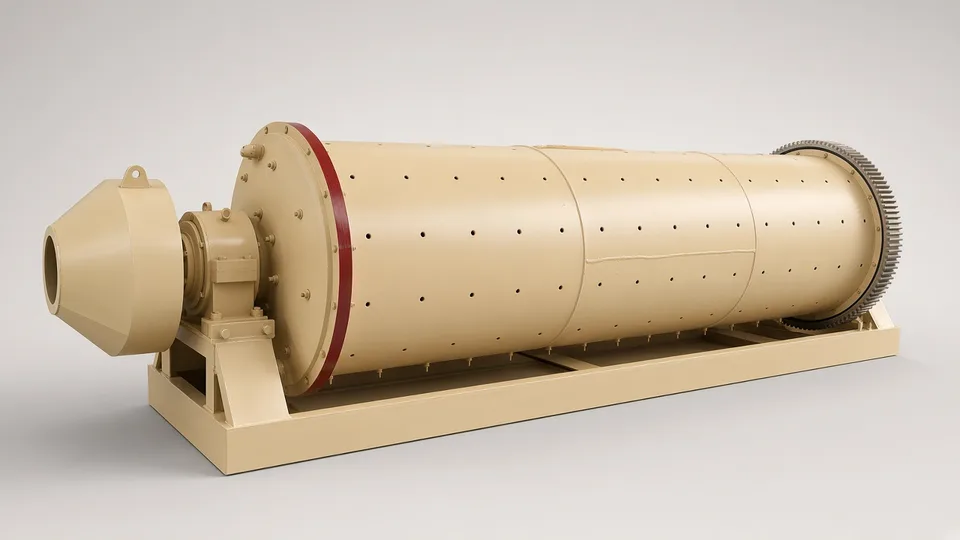
01
Planetary mills spin jars on a rotating disc for the highest energy. Roller jar mills turn jars slowly for large, gentle batches. Vibratory mills shake one jar hard. One name covers all three.
Stainless steel, zirconia, agate, alumina, tungsten carbide or PTFE. Each wears into the sample. Price the exact pair you need, since a carbide set can cost more than a cheap mill body.
Ask for disc speed, jar speed and their ratio, and whether speed holds with every station loaded. An empty-mill figure flatters a weak motor.
Two or four stations are loaded opposite each other with equal mass. Ask whether clamps lock positively and the mill stops on imbalance.
Long runs heat the jars. Look for interval running, reversal, gas-tight jars for air-sensitive powders, and a cryogenic option if the sample smears.
02
Most codes carry total jar volume in litres, spread over two or four jars. Balls and free space take most of each jar.
03
Send these with the enquiry. Without them, any number a factory gives you is a guess dressed as a quotation.
04
| Require this | A pass looks like |
|---|---|
| Grind your own material in the quoted jar material, speed and time, every station loaded. | A particle size report from your laboratory or a third party showing D90 at or below your target. |
| Weigh the ball charge before and after the run, and test the powder for the jar element. | Ball mass loss and the measured contamination both inside the limit you wrote into the order. |
| Run at maximum speed for your longest planned cycle, jars balanced. | Speed stays within the stated value, clamps stay tight, and end jar temperature is recorded. |
05
06
A bead mill, which recirculates slurry through small beads.
A high shear or ultrasonic homogenizer, with no grinding media to wear into the product.
07
We name the kind of source, how many and when, and never the factory. Listed prices are asking prices, not landed cost. Where we do not hold a fact we say so: that is a GAP, not an estimate.
08
Every machine we source in this area is on the Lab & process page. How a project runs, stage by stage, is on how it works, and what it costs is on pricing.
Straight answers
Into bearing life at full load, clamp design, speed held under load, and certified jar sets. Compare with the same jar material quoted on both sides.
Serial number against the declaration, jar material against certificates, loaded speed, clamp locking, lid interlock, imbalance stop, and your own sample ground and sized.
A Declaration of Conformity naming the serial number, backed by a technical file, under machinery, low voltage and EMC rules. A CE mark on a listing proves nothing.
Whoever places it on the EU market, usually you. Your name goes on the mill or its papers, and you check the conformity file exists.
Contact
Send a machine, a quotation you want checked, or a question. We reply with what we would look at first.
Sent
A person reads every message. You will hear back within one working day.
Not sent
Please email info@nodramachina.com directly and we will pick it up from there.