Industrial sourcing · China to Europe
Buyer-firstOpen route · visible proof

Buyer guide · Coffee & tea

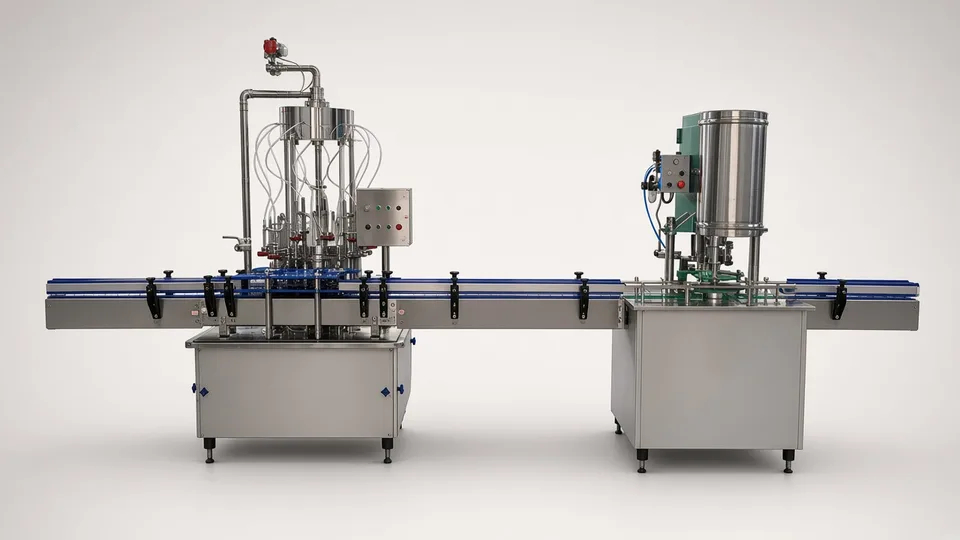
Cold brew filling machine from China

Cold brew is a low-acid drink that is usually not heated, so the filler you need is decided by how the product will stay safe on the shelf, chilled, pasteurised or high-pressure processed, and a filler quoted before that choice is made is a guess.

Written and listings checked 1 October 2026. Every figure on this page names its source.

Cold brew filling machine

01

What you are actually comparing.

Two quotes, one machine name

What hides inside the price
01

Preservation route the filler must serve

A chilled product with a short date can run on a clean gravity or piston filler. Tunnel pasteurisation, retort or high pressure processing each set their own container and seal demands. Tell the factory which route.

02

Container and closure

Aluminium cans need a seamer; PET and glass need cappers. Seam or cap integrity is the food safety barrier, so ask how seam dimensions or cap torque are checked on the line.

03

Nitrogen dosing for nitro cold brew

Nitro cans need liquid nitrogen dosed just before seaming so the can is pressurised when opened. The doser, its timing and can pressure checks are a separate item. Ask whether it is in the price.

04

Hygienic design and cleaning

Low-acid coffee left in dead legs spoils fast. Ask for cleaning in place on the filler bowl and valves, drainable pipework and the cleaning cycle time. EN 1672-2 is the question to raise, not a claim to accept.

05

Fill level control

Level fillers give an even look; volumetric fillers give an even volume. Ask which, and the accuracy measured on coffee, not water.

02

Before you ask for a price.

Send these with the enquiry. Without them, any number a factory gives you is a guess dressed as a quotation.

03

Turn the claim into a demonstration.

Require thisA pass looks like
Fill your cold brew into your containers at target speed for a counted run and weigh each one.Every container inside the declared fill, spread recorded, no foaming overflow.
Tear down or cut sample seams, or torque-test caps, from start, middle and end of the run.All seam measurements or cap torques inside the container supplier's specification.
Run the cleaning cycle and swab the filling valves and bowl afterwards.Swab results at or below the limit your food safety plan sets, with the cycle time recorded.

04

The documents that must arrive with it.

The one people forget. The seal and gasket material list. Your food safety audit will ask what touches the product, and gaskets are the part the factory buys in.

05

When this is the wrong machine.

Buy something else if

Named, not hedged
01

You sell a few hundred litres a week in a chilled market.

A small manual or semi-automatic bottle filler and a co-packer for cans later. A seaming line would stand most of the week.

02

You want shelf-stable ambient cold brew and have no process authority.

A co-packer with a validated thermal or aseptic process. The filler alone cannot make a low-acid product safe.

06

Where the numbers come from.

We name the kind of source, how many and when, and never the factory. Listed prices are asking prices, not landed cost. Where we do not hold a fact we say so: that is a GAP, not an estimate.

07

Related machines.

Every machine we source in this area is on the Coffee & tea page. How a project runs, stage by stage, is on how it works, and what it costs is on pricing.

Straight answers

Questions buyers ask about this machine.

Chinese vs European cold brew filling machine: what matters most?+

Cleanability, seam or cap consistency and experience with low-acid coffee. Ask for reference lines filling coffee or tea, not only water or juice.

What goes on a cold brew filler inspection checklist?+

Weighed fills, seam or torque checks, nitrogen doser timing where fitted, cleaning cycle and swab, seal materials, and the serial number on the declaration.

What EU compliance applies to a cold brew filling machine?+

Machinery rules, 2006/42/EC until 19 January 2027 then Regulation (EU) 2023/1230, the low voltage and EMC directives, and Regulation (EC) 1935/2004 for product-contact parts. Safety of the drink is your process.

Who is the importer of the filler?+

The business placing it on the EU market. It checks the declaration and technical file and puts its name and address on the machine or documents.

Contact

Tell us what you need.

Send a machine, a quotation you want checked, or a question. We reply with what we would look at first.

A person reads it. No marketing automation. Based in the Netherlands.