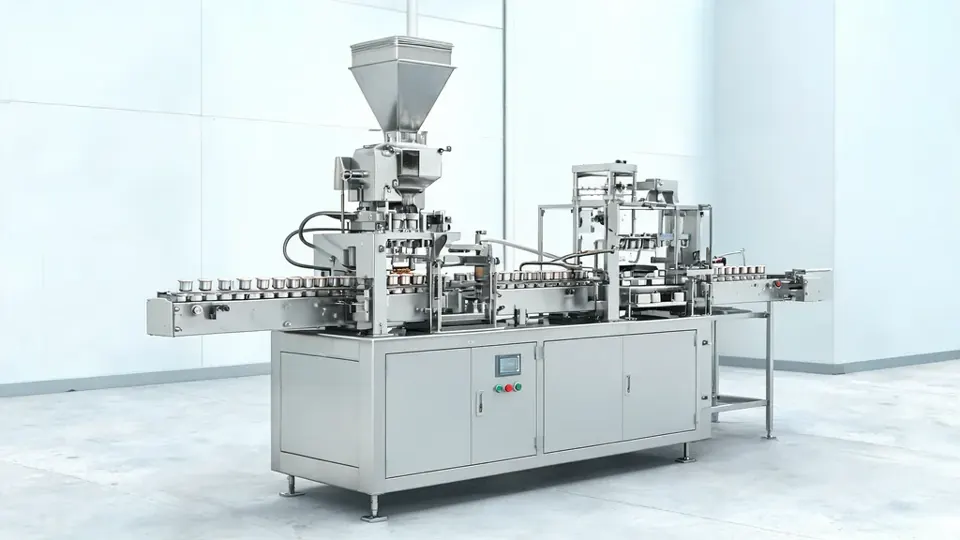
Chinese vs European coffee capsule filling sealing machine: what differs?+
The principle is the same. What differs is dosing consistency on real ground coffee, reliability of check-weigh and reject, residual oxygen performance, and how fast a spare sealing head arrives. Test those four on your coffee before comparing prices.
What goes on a coffee capsule machine inspection checklist?+
Change parts against the order, individual capsule weights per lane, residual oxygen, peel and leak tests, cup-missing detection, reject working, food contact declarations, serial number matching the declaration.
What should a factory audit check for this machine?+
Whether the factory makes holders and sealing heads itself, owns a headspace oxygen analyser and precision balance, and can show a machine running ground coffee, not instant powder.
What CE documentation is needed to import a coffee capsule filler into the EU?+
An EU Declaration of Conformity under the Machinery Directive 2006/42/EC for delivery up to 19 January 2027, or the Machinery Regulation (EU) 2023/1230 from 20 January 2027, plus low voltage 2014/35/EU and EMC 2014/30/EU. A CE mark on a brochure proves nothing; ask for the declaration and technical file.
What does the EU importer of this machine have to do?+
Put its name and address on the machine or documents and check the conformity documentation. If you import directly, that is you.
Does EU compliance cover the coffee contact parts?+
Not through the CE mark. Coffee contact parts fall under Regulation (EC) 1935/2004, and you need that evidence separately.