Chutes and capacity per chute
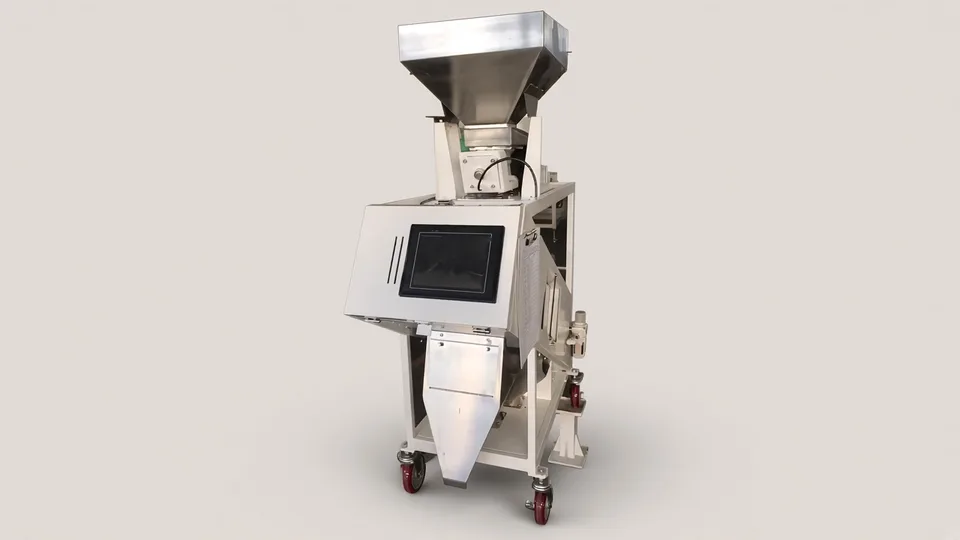
Capacity scales with the number of chutes, and each chute handles only so much grain before accuracy drops. Ask for tonnes per hour per chute on your grain at your defect rate, then count the chutes you need.
 No Drama
Buyer guide · Agriculture & feed
Every grain color sorter claims high accuracy, but the figure is measured on the seller's grain at the seller's defect rate, and at your defect rate and throughput the same machine can throw out good kernels or let bad ones through.
01
Capacity scales with the number of chutes, and each chute handles only so much grain before accuracy drops. Ask for tonnes per hour per chute on your grain at your defect rate, then count the chutes you need.
Full color cameras see shade differences; infrared or shape-sensing cameras find stones, glass and mold that match the grain's color. Ask which defects each camera catches, with test images on your grain.
Ejector valve count, response time and life decide how cleanly a defect is removed without taking good kernels with it. The machine needs clean, dry compressed air, and the compressor and dryer are often left out of the quote.
Carry-over is how many good kernels leave with each rejected one. A high ratio wastes grain. Many sorters re-sort the reject stream in a second stage; ask whether yours does and at what cost in chutes.
Sort programs for each grain, language of the interface, and whether the seller can adjust settings remotely. Ask who in Europe can do it when the seller is asleep.
02
Send these with the enquiry. Without them, any number a factory gives you is a guess dressed as a quotation.
03
| Require this | A pass looks like |
|---|---|
| Sort a weighed lot of your own grain, with a known defect count, at your target tonnes per hour. | Defects left in the accepted stream counted by hand on a weighed sample and inside the contract figure. |
| Count good kernels in a weighed sample of the reject stream. | Carry-over ratio calculated and at or below the value agreed in the offer. |
| Run for a full hour and repeat the count at the end. | Accuracy at the end within the agreed drift of the start, with air pressure logged. |
04
05
A seed cleaning machine first. A color sorter is the last step, after cleaning and grading by size.
A fruit grading machine, built to carry each fruit separately.
06
We name the kind of source, how many and when, and never the factory. Listed prices are asking prices, not landed cost. Where we do not hold a fact we say so: that is a GAP, not an estimate.
07
Every machine we source in this area is on the Agriculture & feed page. How a project runs, stage by stage, is on how it works, and what it costs is on pricing.
Straight answers
One tested on your paddy or milled rice at your defect rate, with enough chutes for your tonnes per hour and a second stage for the reject stream.
Compare camera type, ejector life, software and support in your time zone. Test both on the same sample of your grain and compare counts, not brochures.
Serial against the declaration, camera and ejector counts against the offer, a sorted lot counted by hand, carry-over counted, and air consumption measured.
The business placing it on the EU market. It checks the declaration and technical file and adds its name and address to the machine or papers.
Contact
Send a machine, a quotation you want checked, or a question. We reply with what we would look at first.
Sent
A person reads every message. You will hear back within one working day.
Not sent
Please email info@nodramachina.com directly and we will pick it up from there.