Gauge
Needles per inch on the bed. Coarse gauges knit chunky sweaters, fine gauges knit thin knitwear. One machine knits one gauge well; multi-gauge claims deserve a sample in each.
 No Drama
Buyer guide · Textile & garment
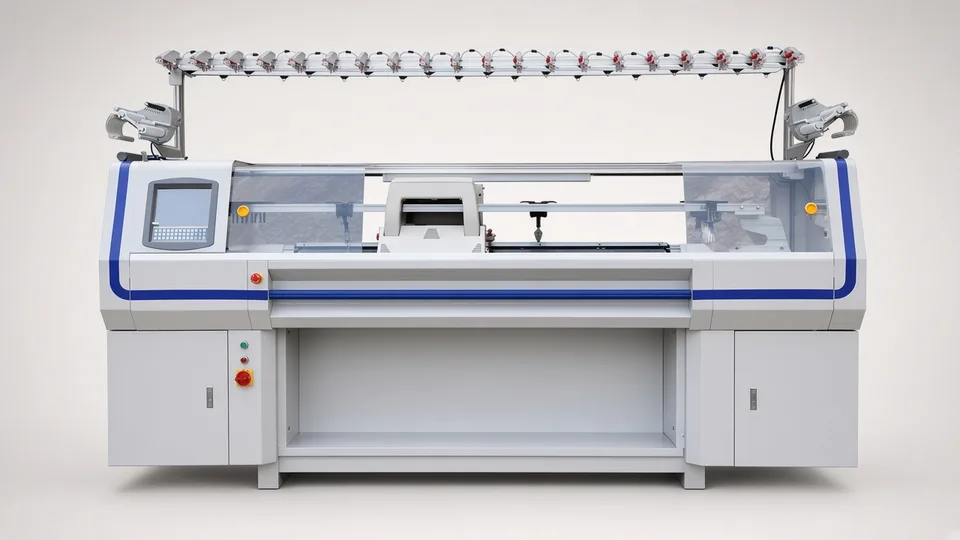
A flat knitting machine is sold by photo and price while the three numbers that decide what it can knit, gauge, number of systems and bed width, are missing from most listings, and the pattern software that makes it useful is often a separate question nobody asks.
01
Needles per inch on the bed. Coarse gauges knit chunky sweaters, fine gauges knit thin knitwear. One machine knits one gauge well; multi-gauge claims deserve a sample in each.
Each system knits one course per carriage pass. More systems give more courses per pass and more pattern freedom in one stroke, at a higher price.
Width decides how many panels knit side by side. A collar and cuff machine is narrow; a body panel machine is wide.
Full fashioning narrows and widens the panel by stitch transfer. Ask whether the machine shapes panels or only knits rectangles you then cut.
Designs are programmed on a separate system. Ask for its language, its licence terms and whether files from your designer will open.
02
Send these with the enquiry. Without them, any number a factory gives you is a guess dressed as a quotation.
03
| Require this | A pass looks like |
|---|---|
| Knit a counted set of your panels in your yarn from a pattern file your programmer prepared. | Every panel inside your size tolerance, with the file opening and running without the factory editing it. |
| Run the machine for a full shift on one design. | Dropped stitches and holes at or below the agreed count per panel, and each stop logged with its cause. |
| Knit a shaped panel with narrowing and a transfer stitch structure. | Clean fashioning marks and no ladders at the transfers, checked on a light table. |
04
05
A circular knitting machine. A flat bed is slow at plain yardage.
A hand-operated flat bed, or a knitting service, until volume pays for computer control.
06
We name the kind of source, how many and when, and never the factory. Listed prices are asking prices, not landed cost. Where we do not hold a fact we say so: that is a GAP, not an estimate.
07
Every machine we source in this area is on the Textile & garment page. How a project runs, stage by stage, is on how it works, and what it costs is on pricing.
Straight answers
For whole-garment or very fine gauge work, compare a sample against a used European or Japanese machine, which are traded. For standard gauges and panels, compare needle wear, software and local service.
Machines running your gauge on the floor, a spares store for needles and sinkers, and a programmer who can open your files.
Machinery rules plus low voltage and EMC. Ask for the declaration and the risk assessment on carriage guarding; the mark alone is not proof.
The business that places it on the EU market. Buying direct, that is you: your name goes on the machine or papers.
Contact
Send a machine, a quotation you want checked, or a question. We reply with what we would look at first.
Sent
A person reads every message. You will hear back within one working day.
Not sent
Please email info@nodramachina.com directly and we will pick it up from there.