Which e-waste the line is built for
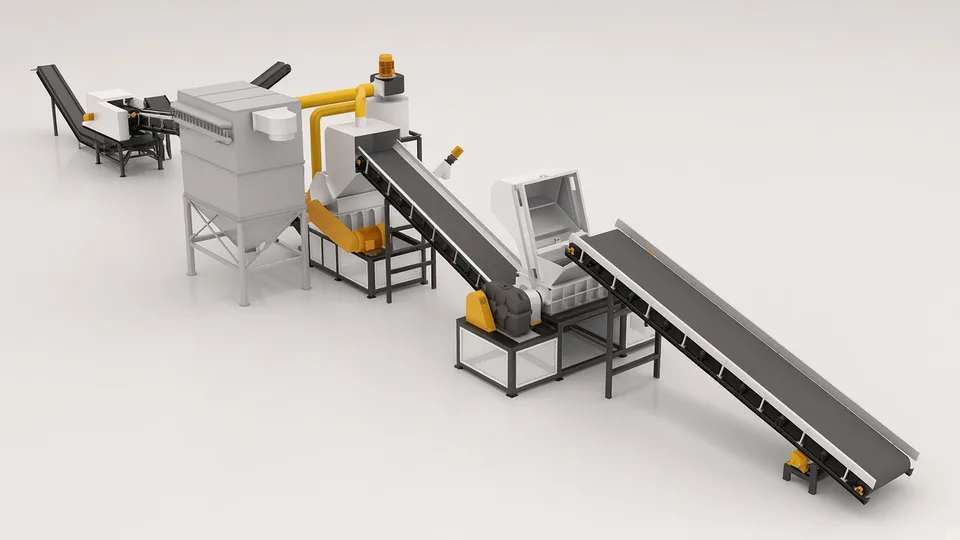
Circuit board lines grind boards to powder and split metal from resin and glass fibre. Appliance lines break whole devices first. One line rarely does both.
 No Drama
Buyer guide · Recycling
An e-waste separation line is bought for the metal it recovers, and no listing we checked stated a recovery figure or a throughput, so the number that decides the business is the one you must measure yourself.
01
Circuit board lines grind boards to powder and split metal from resin and glass fibre. Appliance lines break whole devices first. One line rarely does both.
Air tables, electrostatic, eddy current and water separators all appear under one name, and each catches a different fraction. Ask for the method at every step, in writing.
Batteries, capacitors and lamps must come out before the shredder. Ask whether the offer includes a depopulation bench or nothing.
More grinding stages free more copper from thin board layers but cost power and wear. Ask the stage count and the final particle size.
Grinding boards makes fine resin, glass fibre and metal dust. Ask the filter type and whether the collector is priced in.
02
Send these with the enquiry. Without them, any number a factory gives you is a guess dressed as a quotation.
03
| Require this | A pass looks like |
|---|---|
| Run a weighed batch of your own boards or devices through every stage of the line. | Metal, plastic and dust fractions each weighed, and the total of the fractions close to the weight you put in. |
| Send the metal and the non-metal fraction to an independent laboratory. | Metal content in the non-metal fraction at or below the limit your buyer accepts, written into the contract. |
| Time the batch from first feed to last fraction out. | Measured kilograms per hour on your mix at or above the figure written in the offer. |
04
05
A cable recycling machine. Its granulator and air table are sized for wire, and it costs far less than a board line.
A waste sorting line upstream, so electronics are picked out and sent on, instead of grinding everything together.
06
We name the kind of source, how many and when, and never the factory. Listed prices are asking prices, not landed cost. Where we do not hold a fact we say so: that is a GAP, not an estimate.
07
Every machine we source in this area is on the Recycling page. How a project runs, stage by stage, is on how it works, and what it costs is on pricing.
Straight answers
In the separators, dust and fire systems, and documented recovery. Send each maker the same board sample and compare the metal weighed back.
A line of the same design running on real boards, which separators are made in house, guarding on the shredders, and how metal content in the output is tested.
One Declaration of Conformity for the whole line, the manual in your language and the electrical drawings. A CE mark on one separator does not cover the line.
When you buy direct, your company is the importer and its name goes on the machine or documents. Treating waste electrical equipment is covered by the WEEE Directive 2012/19/EU and national permits, and that is the operator's matter, not the machine's.
Contact
Send a machine, a quotation you want checked, or a question. We reply with what we would look at first.
Sent
A person reads every message. You will hear back within one working day.
Not sent
Please email info@nodramachina.com directly and we will pick it up from there.