Knife mill or pelletizer
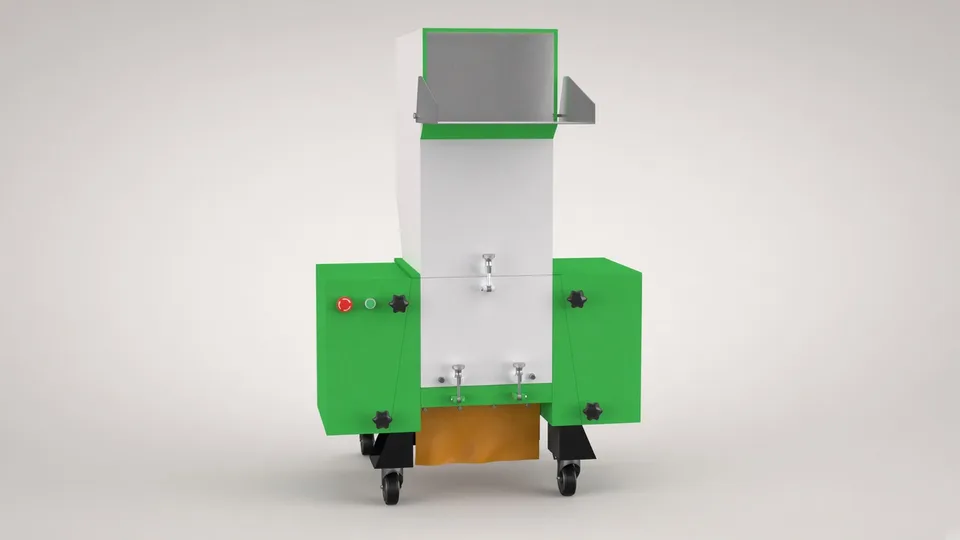
A knife granulator has a rotor with knives, a bed knife and a screen, and makes regrind. A pelletizing granulator melts and cuts pellets. Ask for a photo of the rotor or the screw.
 No Drama
Buyer guide · Recycling
Recycling granulator names two different machines in Chinese listings, a knife mill that cuts plastic into flakes and an extruder line that melts it into pellets, and a buyer can end up comparing offers that are not the same machine.
01
A knife granulator has a rotor with knives, a bed knife and a screen, and makes regrind. A pelletizing granulator melts and cuts pellets. Ask for a photo of the rotor or the screw.
Open rotors suit soft or thick parts; closed rotors suit thin, hard material. Ask the rotor type, its diameter and the number of rotating and fixed knives.
The screen hole size sets the flake size. Ask for the sizes supplied and how long a screen change takes.
Ask the knife steel, hardness, and whether knives are set outside the machine in a jig or adjusted inside. Knives set in a jig go back in faster and cut more evenly, which keeps flake size steady between changes.
Granulators are loud and make fines. Ask whether a sound enclosure and a fines separator are included.
02
Send these with the enquiry. Without them, any number a factory gives you is a guess dressed as a quotation.
03
| Require this | A pass looks like |
|---|---|
| Granulate a weighed batch of your thickest and your thinnest parts. | Output weighed per hour at or above the offer, and flake size inside your specification. |
| Sieve a sample of the regrind. | Fines below the share your process accepts, measured by weight. |
| Change the screen and reset one knife. | Both done in the times stated in the manual, with guards interlocked while open. |
04
05
An industrial recycling shredder in front. A granulator feed opening and rotor are not built for them.
A plastic recycling line with an extruder, which is what many listings called granulator mean.
06
We name the kind of source, how many and when, and never the factory. Listed prices are asking prices, not landed cost. Where we do not hold a fact we say so: that is a GAP, not an estimate.
07
Every machine we source in this area is on the Recycling page. How a project runs, stage by stage, is on how it works, and what it costs is on pricing.
Straight answers
Rotor build, knife steel, noise enclosure and screen change design. Granulate the same sample on both, then compare flake size, fines by weight and the time each knife change takes.
Rotor balancing, knife grinding in house, cutting chamber welding, guard interlocks and a running machine on real scrap.
A Declaration of Conformity with the serial number, and a manual in your language describing safe knife changes. The CE mark alone proves nothing.
Your company. It checks the documentation and puts its name on the machine or its papers.
Contact
Send a machine, a quotation you want checked, or a question. We reply with what we would look at first.
Sent
A person reads every message. You will hear back within one working day.
Not sent
Please email info@nodramachina.com directly and we will pick it up from there.