Industrial sourcing · China to Europe
Buyer-firstOpen route · visible proof

Buyer guide · Coffee & tea

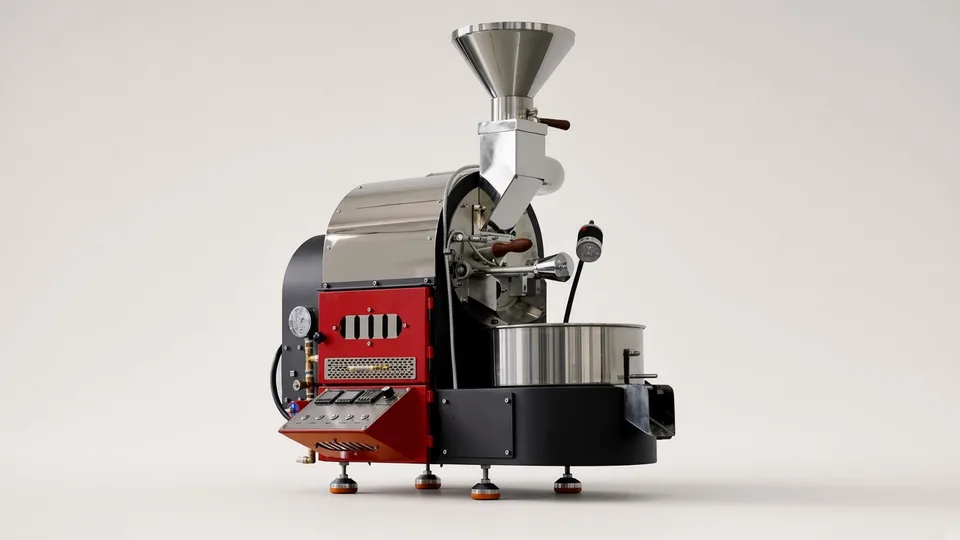
Coffee roasting machine from China

The drum is the easy part; the hard part is the burner and gas train, because the gas installer or insurer will ask which rules the burner was assessed under, and a roaster with no answer may never be allowed to light.

Written and listings checked 1 October 2026. Every figure on this page names its source.

Coffee roasting machine

01

What you are actually comparing.

Two quotes, one machine name

What hides inside the price
01

Heat source and gas approval

Ask whether the burner, valves and flame supervision fall under the Gas Appliances Regulation (EU) 2016/426, which excludes appliances designed for industrial processes on industrial premises, and if so for the EU type examination. Electric roasters avoid that but draw a heavy load. Ask for the certificate number, not a CE sticker.

02

Nominal batch versus usable batch

A 15 kg label is the green bean maximum. Many roasters run best below it for lighter roasts. Ask what batch the profile curves in the brochure were roasted at.

03

Drum wall and airflow control

Drum thickness and material change how heat reaches the beans. Separate control of drum speed, burner and fan is what lets you repeat a profile. Ask which of the three the controller adjusts.

04

Profile logging

Bean and exhaust temperature probes feeding roast software let you repeat a roast. Ask which probes are fitted, where, and whether logs export.

05

Cooling tray and chaff

A slow cooler keeps roasting the beans after drop. Ask for cooling time on a full batch, and how chaff is collected.

02

Before you ask for a price.

Send these with the enquiry. Without them, any number a factory gives you is a guess dressed as a quotation.

03

Turn the claim into a demonstration.

Require thisA pass looks like
Roast full batches of your own green coffee at your usual profile, logging bean temperature throughout.Consecutive batches reach first crack and drop within an agreed spread of time and temperature on the log.
Measure cooling on a full batch from drop.Beans reach handling temperature within the time you set before the test, with the fan and stirrer running.
Trip the flame and power while the burner runs.Gas shuts off automatically, the drum keeps turning or dumps safely, and the fault shows on the controller.

04

The documents that must arrive with it.

The one people forget. The gas certificate. Buyers check the CE declaration and only learn at connection that the gas installer or insurer wants the burner certification.

05

When this is the wrong machine.

Buy something else if

Named, not hedged
01

You roast a few bags a week for one cafe.

A small shop roaster from an established local dealer, where gas approval and service are already settled.

02

You need tonnes an hour of commodity roast.

A continuous industrial roaster. Batch drums in this range do not scale to that duty.

06

Where the numbers come from.

We name the kind of source, how many and when, and never the factory. Listed prices are asking prices, not landed cost. Where we do not hold a fact we say so: that is a GAP, not an estimate.

07

Related machines.

Every machine we source in this area is on the Coffee & tea page. How a project runs, stage by stage, is on how it works, and what it costs is on pricing.

Straight answers

Questions buyers ask about this machine.

Chinese vs European coffee roasting machine: which should I buy?+

Compare gas approval, profile repeatability and service. A used European roaster with its gas papers intact can be the better buy.

What goes on a coffee roaster inspection checklist?+

Gas certificate against the burner fitted, bean probe position, logged roast repeatability, cooling time, flame failure test and serial number matching the declaration.

What CE documentation does an imported coffee roaster need?+

A Declaration of Conformity under 2006/42/EC until 19 January 2027, then Regulation (EU) 2023/1230, plus 2014/35/EU and 2014/30/EU. For gas roasters, ask whether Regulation (EU) 2016/426 applies and for its certificate if it does.

Who is the EU importer of the roaster?+

The business placing it on the EU market. It checks the documents, including the gas certificate, and adds its name and address.

Contact

Tell us what you need.

Send a machine, a quotation you want checked, or a question. We reply with what we would look at first.

A person reads it. No marketing automation. Based in the Netherlands.